Origins
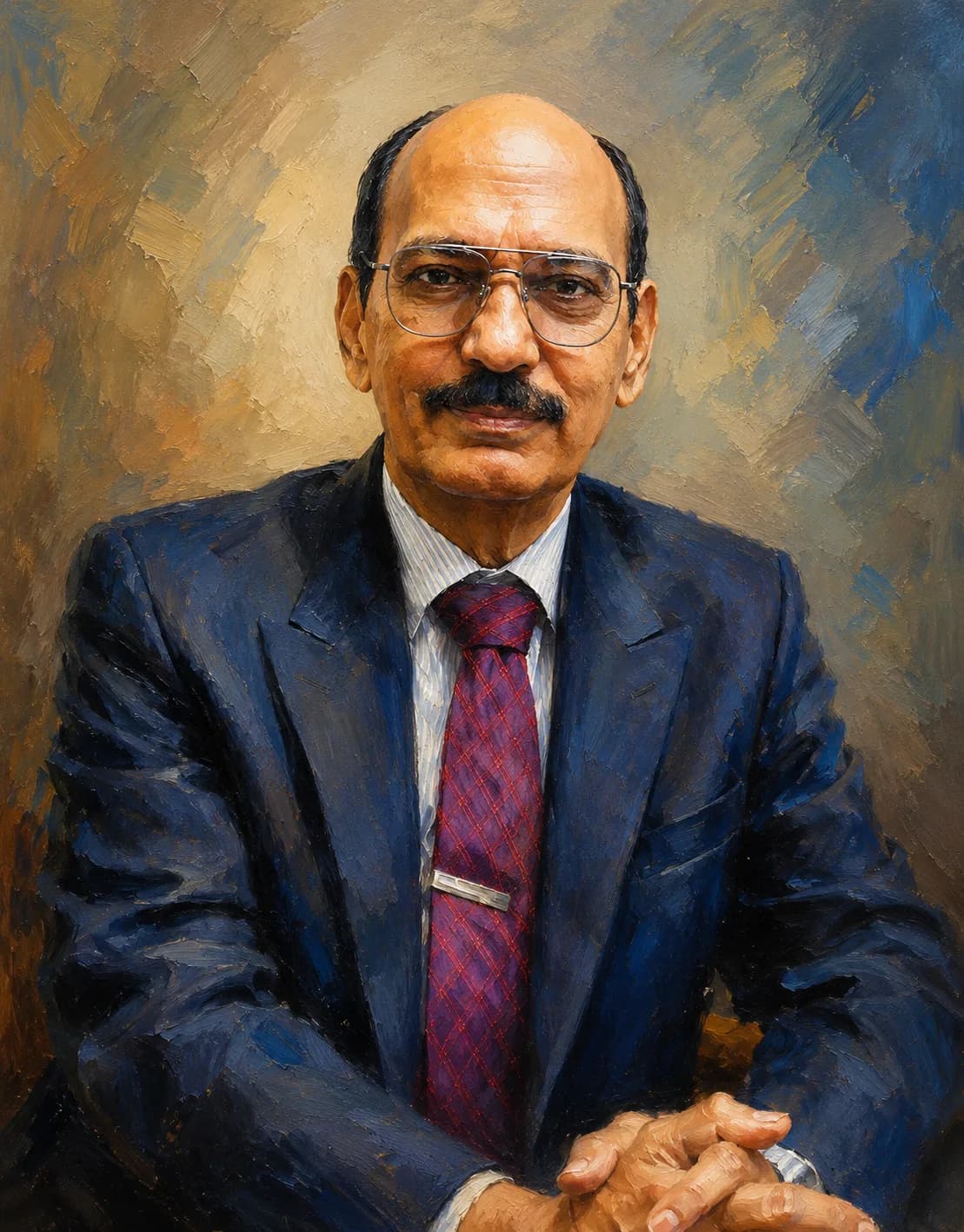
The institution began before it was an institution. In Kota Kinabalu, Sabah, Malaysia, Prof. Dr. P. Muthusamy served as coordinator for the International Council of Ophthalmology's Basic Sciences and Clinical Science Assessment. The role was administrative. The teaching, when it began, was voluntary.
He started coaching candidates in Basic Sciences and Optics & Refraction — the foundations the rest of the curriculum stands on, the parts most often underestimated and most often failed. The work was done by correspondence. There was no classroom, no fee, no formal enrolment. There were simply candidates who wanted to pass, and a senior ophthalmologist willing to read their answers and write back.
His students passed. Then they passed the Royal College of Surgeons of Edinburgh’s Final Ophthalmology Examination — a harder test, on a different continent. The pattern repeated. Cohort after cohort.
The Muthusamy Medal
In 1982, the Royal College of Surgeons of Edinburgh struck a medal in his name. The Muthusamy Medal is awarded to the candidate who places highest in the Final Ophthalmology Examination.
It has been awarded continuously ever since. Recipients include the co-editors of standard ophthalmology texts — among them the textbooks by Tandon and Bowling that successive cohorts have studied to prepare for the very same exam. The medal predates the Virtual University by twenty years; the teaching it recognised was happening long before the website existed.
That sequence matters. The recognition came first. The institution that now bears the founder’s name was built later, around a teaching practice that had already been validated by an exam body that does not strike medals lightly.
The university
The Muthusamy Virtual University of Postgraduate Ophthalmology was founded in September 2002. It has taught free of charge from the first day to the present.
Teaching is by email. Candidates work through structured tracks aligned with major examination bodies: a Basic Sciences course of 45+ levels, Optics & Refraction across 16 levels, ICO Advanced and Clinical Sciences, FRCSEd parts A · B · C, FRCOphth Part 1 / Part 2 / Diploma, and the FRCS Glasgow Final. Faculty respond to written answers, mark MCQs, and recommend reading. The cadence is the candidate’s; the standard is the exam body’s.
There is no tuition tier, no upsell, no certificate sold separately. The work is the work, and it costs what it has always cost — nothing.
The faculty
The faculty grew the way the medal recipients had: by alumni returning. The structure today reflects that origin. Faculty 1 comprises Muthusamy Medal recipients. Faculty 2 comprises successful alumni of the university’s tracks who have returned to teach the next cohort. Together they exceed ninety members across six continents.
Leadership is held by Prof. Dr. Koushik Tripathy as Dean and Assoc. Prof. Dr. Pranessh Ravi as Deputy Dean. Regional Directors coordinate the work across geographies; departmental heads steward the per-subject curricula. The administrative load is distributed deliberately so that no candidate is dependent on a single point of contact.
Aligned with
The university’s tracks are aligned with the examinations of five international examining bodies — four Royal Colleges and the International Council of Ophthalmology. Alignment is not affiliation in the corporate sense — these bodies do not endorse private providers. Alignment means that the syllabus, the question style, and the standards of judgement used in our teaching mirror what candidates will encounter on examination day. The pass rate over twenty-three years argues that the mirror is true.
- International Council of Ophthalmology — ICO
- Royal College of Surgeons of Edinburgh — RCSEd
- Royal College of Ophthalmologists — RCOphth
- Royal College of Physicians and Surgeons of Glasgow — RCPSG
- Royal College of Surgeons in Ireland — RCSI
What we promise
Five things, in the order we mean them:
- To be a virtual postgraduate ophthalmology institution of world-class standard.
- To deliver borderless ophthalmic education at the highest standard.
- To work toward unified standards for ophthalmology instruction and assessment globally.
- To be recognised as a leading virtual educational provider in our field.
- To conduct examinations whose recognition reaches everywhere our graduates practise.
The harder I work, the luckier I get.